

Finding a legal envelope in your mailbox or being handed a stack of legal papers can be an incredibly stressful experience. For most people, the immediate reaction is a mix of anxiety and confusion. However, the legal system runs on strict timelines, and freezing up is the worst thing you can do. If you have just received a court document, taking a systematic, step-by-step approach will help you protect your rights and navigate the situation calmly.
Step 1: Identify the Document
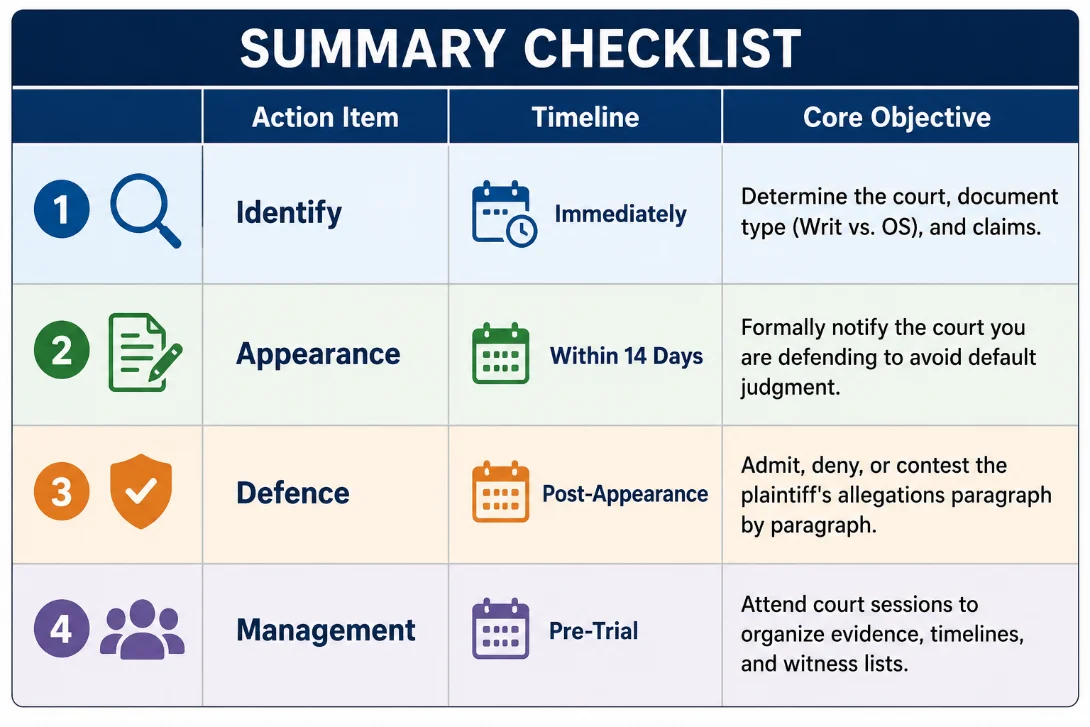
Before you panic, you need to understand exactly what you are holding. Not every court document means you are being sued right this second, but you must look for three key pieces of information:
Step 2: The Critical First Move — Entering Appearance (For a Writ)
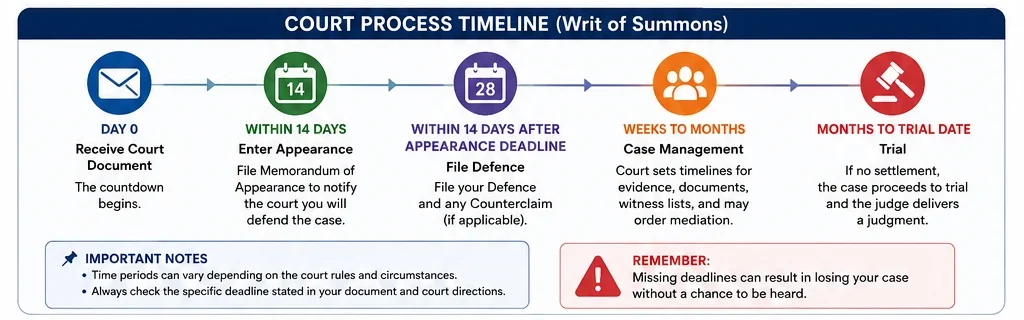
If you determine that the document is a Writ, a strict legal countdown begins immediately. Your absolute priority is to Enter an Appearance. This is a formal notification to the court and the plaintiff that you acknowledge the lawsuit and intend to defend yourself.
The 14-Day Rule: You generally have exactly 14 days from the date you received the Writ to enter your appearance (not including the day of receipt).
You can complete this step in two ways:
The Danger of Inaction: Do not miss this deadline. Failure to enter an appearance within the 14-day window gives the plaintiff the right to apply for a Judgment in Default of Appearance (JID). If a JID is entered, the plaintiff wins the case automatically without ever having to prove their claims at trial, and the court can order enforcement actions against you.
Step 3: Drafting and Filing Your Defence
Once your appearance is securely entered, the next clock starts ticking—usually giving you 14 days after the appearance deadline to file your formal Defence.
Your Defence is a paragraph-by-paragraph response to the plaintiff’s Statement of Claim. For every single allegation the plaintiff makes, you must choose one of three responses:
If you have a claim against the plaintiff arising from the same issue, this is also the stage where you file a Counterclaim alongside your Defence.
Step 4: Case Management and Trial
Since the paperwork (the “pleadings”) is exchanged, the court will also step in to manage the timeline of the lawsuit through Case Management.
During Case Management, a judge or registrar will call both parties together to set timelines for sharing evidence, filing bundles of documents, and finalizing witness lists. They may also suggest mediation to see if the matter can be settled out of court.
If a settlement cannot be reached, the case moves to the final stage: The Trial. This is where your case is argued in open court. Witnesses will be called to testify, evidence will be examined, and lawyers will make their final submissions. Ultimately, the judge will weigh the evidence and deliver a final judgment.
Receiving a court document is serious, but it is not an immediate defeat. By understanding the nature of the document, strictly observing the court’s strict timelines, and seeking professional legal advice early, you can systematically build your defense and ensure your voice is heard.
Disclaimer: This article is for general information purposes only and does not constitute legal advice. Specific advice should be sought based on the facts and structure of each transaction.
